

Supporting breastfeeding at the workplace helps parents feel secure and be more productive
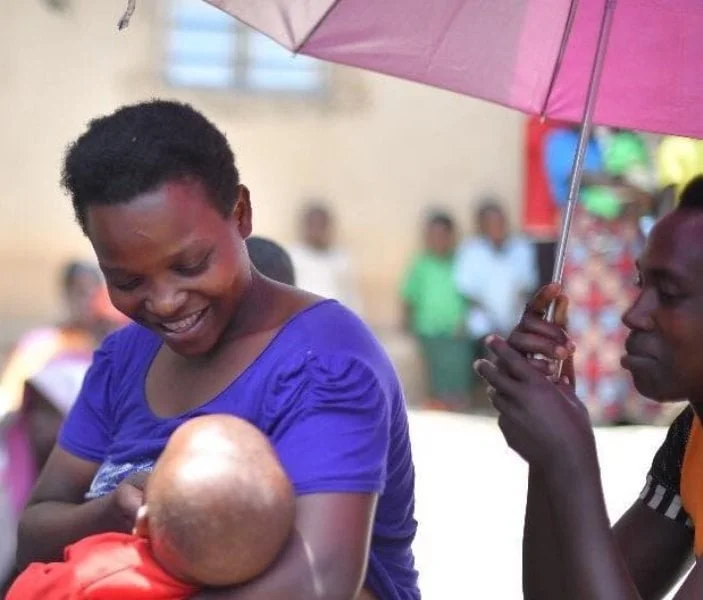
A mother who is breastfeeding her baby. Photo: The Bridge
Parents who are supported to breastfeed at the workplace say it yields positive results for the child, the parent, and the institution they work for because they feel at ease. Different employers are therefore encouraged to set up breastfeeding rooms at workplaces.
Statistics show that the number of parents who exclusively breastfeed their children for the first six months has declined from 87.3% in 2015 to 80.9% in 2020. Parents are encouraged to continue breastfeeding their children, including at the workplace, as highlighted in this year’s theme: “Let us ensure that parents are supported to breastfeed at their workplaces.”
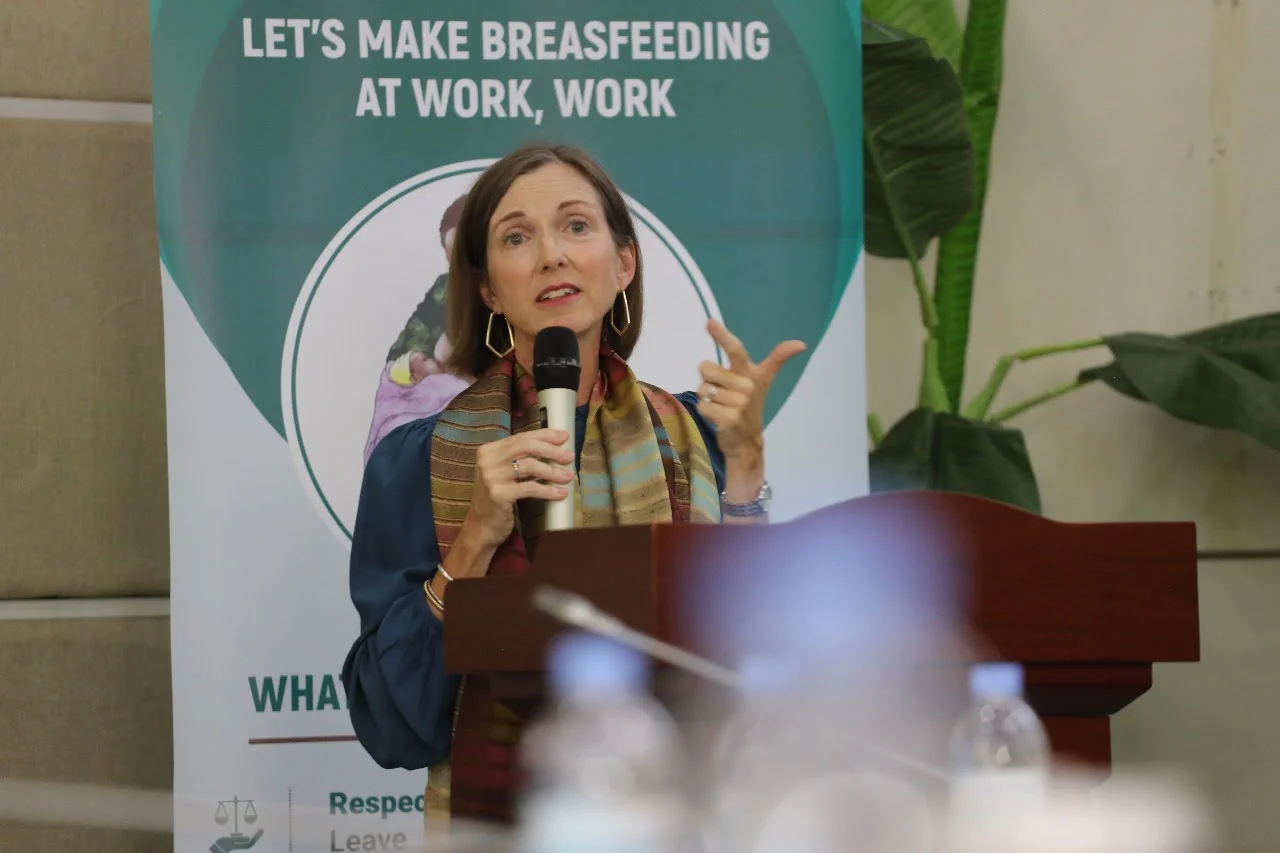
Juliana Lindsey, the UNICEF Representative in Rwanda, says that no parent should have to choose between contributing to the country’s economy and breastfeeding, because it is possible to do both.
She calls on all public and private institutions to make every effort to set up a room where a parent can breastfeed or express milk at work. She said: “It does not require a large space, but it is possible. A parent can work without disturbance while the child receives breast milk that contains essential nutrients for proper growth.”
In an interview with The Bridge Magazine (www.thebridge.rw), Uwimana Anna, the head teacher of Rwimbogo Primary and Nursery School, shared the experience of a mother who breastfed her child exclusively for six months and the benefits of breastfeeding during this period.
“We welcomed this workplace breastfeeding program as parents because when I gave birth to my first child in 2022, I loved the baby deeply. When my three-month maternity leave ended and I was required to return to work, I felt afraid to leave my three-month-old baby behind. I did not feel comfortable staying away from my child during those early months and worried about the care the baby would receive from others. On my first day back at work, I went to work but honestly, I did not perform well because I was anxious. At that time, I was a teacher. Being at school teaching other children while my infant was at home made me uneasy. I kept calling home to check on the baby. On the second day, I decided to go to work with my baby. I had not even formally requested permission, but fortunately my supervisor did not object. There was a room away from the classrooms, so I brought a mattress and basic items, along with a young woman to help care for the baby. I would go to class and teach, then at break time rush to breastfeed my baby, return to teaching, and feel happy and at peace. I felt more connected to my students and to the people around me. This helped my child complete six months of exclusive breastfeeding without any other food, grow well, and fall sick less often. At the same time, I was productive at work. When a child is sick, you miss work. Having my baby nearby made me feel secure in my job.”
Anna concluded by saying that she will encourage school administrators to establish breastfeeding rooms, as they are the first to benefit from such initiatives. At the school she leads, she plans to fast-track the implementation of this program after seeing its positive impact firsthand.

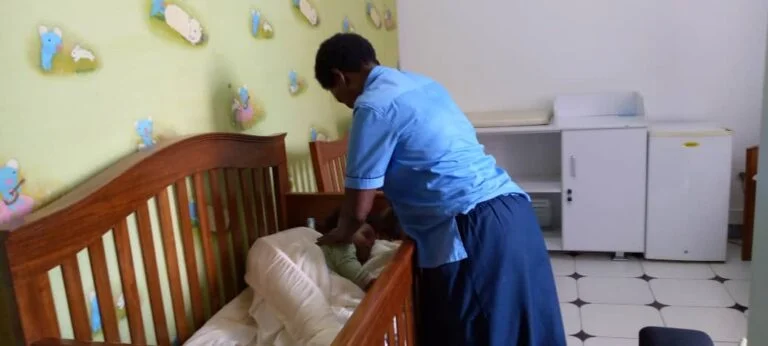
In some workplaces, breastfeeding rooms have already been established. Banamwana Yvette, an employee of the City of Kigali, where such a room exists, says it has been a real solution for breastfeeding parents. She said: “There are many benefits to breastfeeding at work. After three months, I returned to work with my baby. I breastfed properly, the baby rarely fell sick, unlike before when I was constantly at the hospital, and my productivity increased.”
Machara Faustin, who works at the National Child Development Agency and is in charge of maternal and child nutrition, confirms that such rooms are essential to ensure proper breastfeeding during the first six months, as they protect children from diseases. He said: “Breastfeeding is the most effective vaccine because breast milk reduces many diseases, especially diarrhea, pneumonia, and other respiratory infections. Children who are exclusively breastfed during the first six months have a much lower risk of suffering from these illnesses.”

The Minister of Gender and Family Promotion, Dr. Valentine Uwamariya, says that Rwanda is fortunate because breastfeeding is part of its culture. She further explains that nutrition and health experts recommend that a newborn should be exclusively breastfed for at least six months without any additional food. From six months onwards, complementary foods should be introduced while breastfeeding continues until at least two years of age. This helps protect children from frequent illness, malnutrition, and stunting. She emphasized that no other substance has been found to provide the body with nutrients and protection as effectively as breast milk.
She therefore encourages employers to establish breastfeeding spaces, noting that modern life requires both parents to work in order to support their families. She said: “Breastfeeding parents who work outside the home often spend between six and eight hours away. For a child to breastfeed adequately, they need to be breastfed at least two to four times during those hours, depending on the child’s needs.”
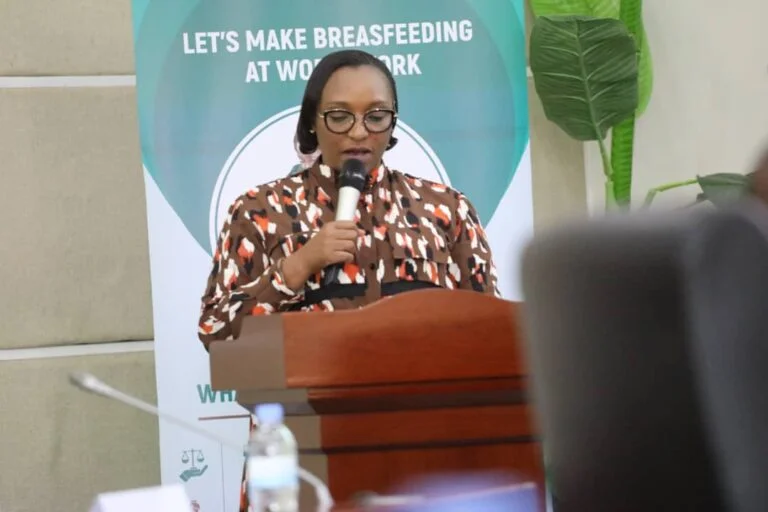
Rwanda and the rest of the world marked World Breastfeeding Week, a global campaign advocating for the establishment of breastfeeding rooms at workplaces.