
Community childcare centres offer hope in Nyabihu’s fight against child stunting
Community childcare centres, nutrition education and greater involvement of parents in childcare are among the approaches being used in Nyabihu District to tackle child stunting. While the district has recorded a decline in stunting rates, nearly one in three children under five remains affected, highlighting the need to strengthen existing interventions.
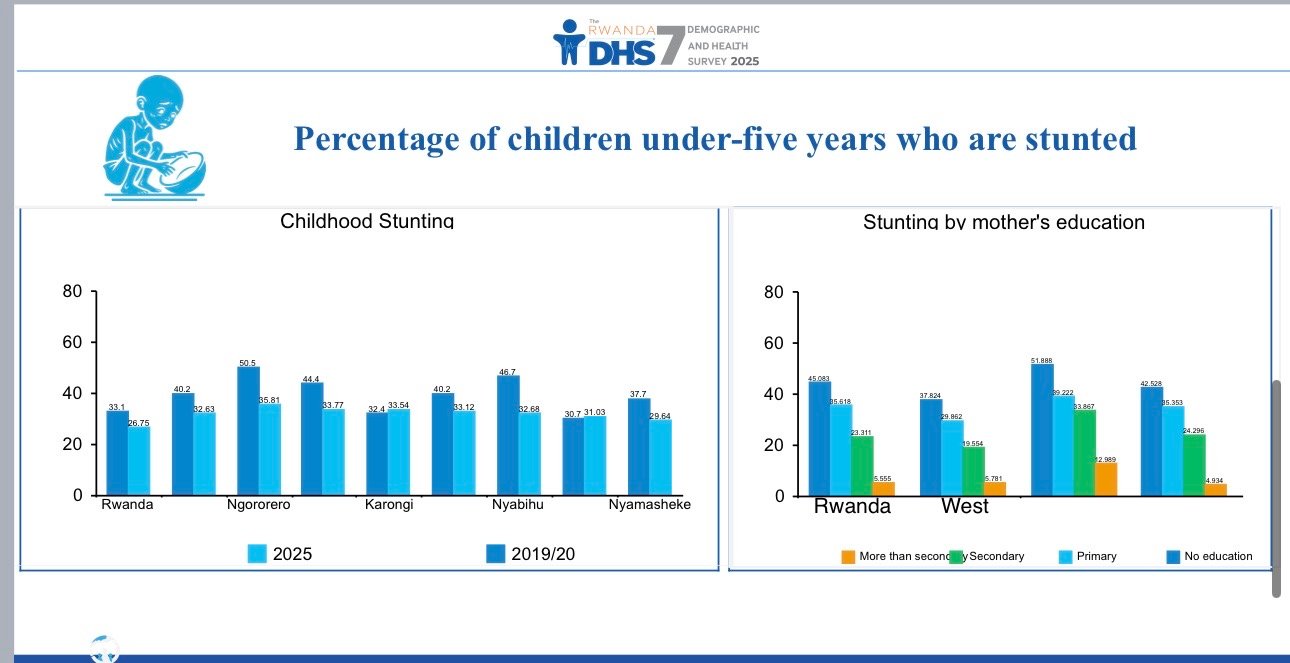
According to the 2025 Rwanda Demographic and Health Survey (RDHS-7), the prevalence of stunting among children under five in Nyabihu declined from 46.7% in 2019/2020 to 32.68% in 2025, a reduction of 14.02 percentage points over five years.
The improvement represents progress, but the figures also show that the challenge remains significant. The experience of families and local authorities points to the importance of ensuring that children receive adequate nutrition and care, while addressing the social and household factors that contribute to stunting.
Community childcare centres helping parents care for children
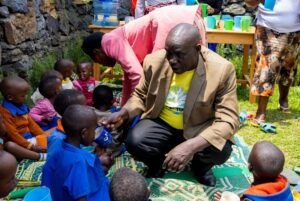
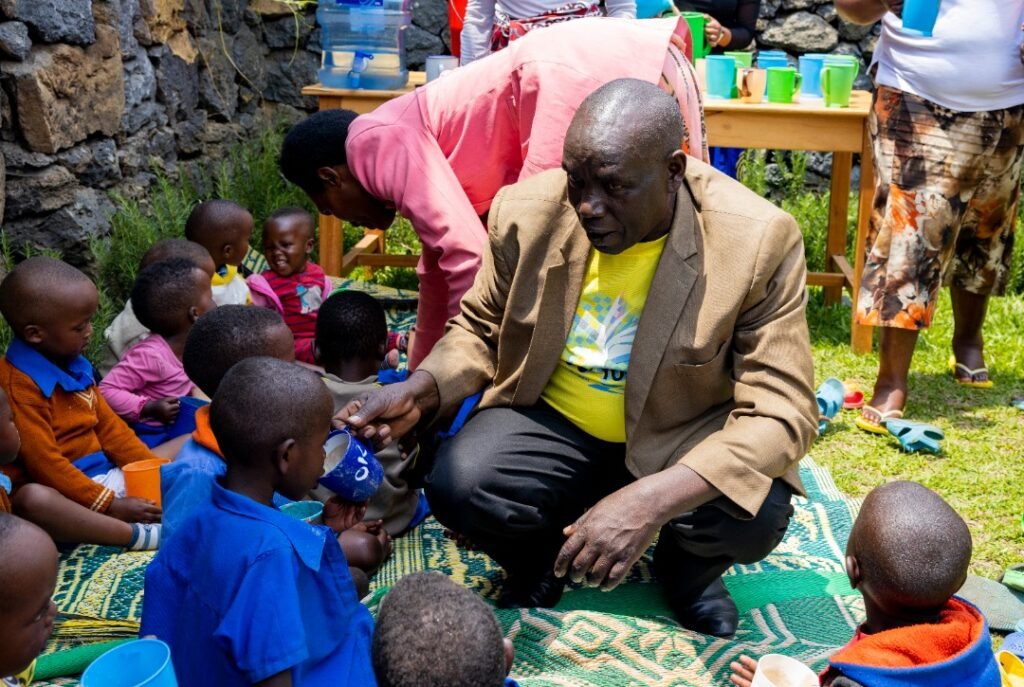
For parents who spend much of their day working to support their families, finding someone to care for their children can be difficult. In Jenda Sector, community childcare centres are providing an option that allows parents to pursue their livelihoods while their children receive care and meals.
Umubyeyi Yvette, 35 ans, a mother of six, says the childcare centre near her home has made a difference, particularly for parents who previously travelled to the Democratic Republic of Congo (DRC) in search of work.
She explains that some children were left without adequate care when their parents crossed the border to work. The establishment of childcare centres has helped address some of these difficulties.
“Previously, children sometimes suffered from poor nutrition because we were unable to care for them properly while we went to work in Congo. The childcare centre has helped us because children now receive meals. I also take my child there, which allows me to go to work with peace of mind, knowing that my child will receive a nutritious meal,” she says.
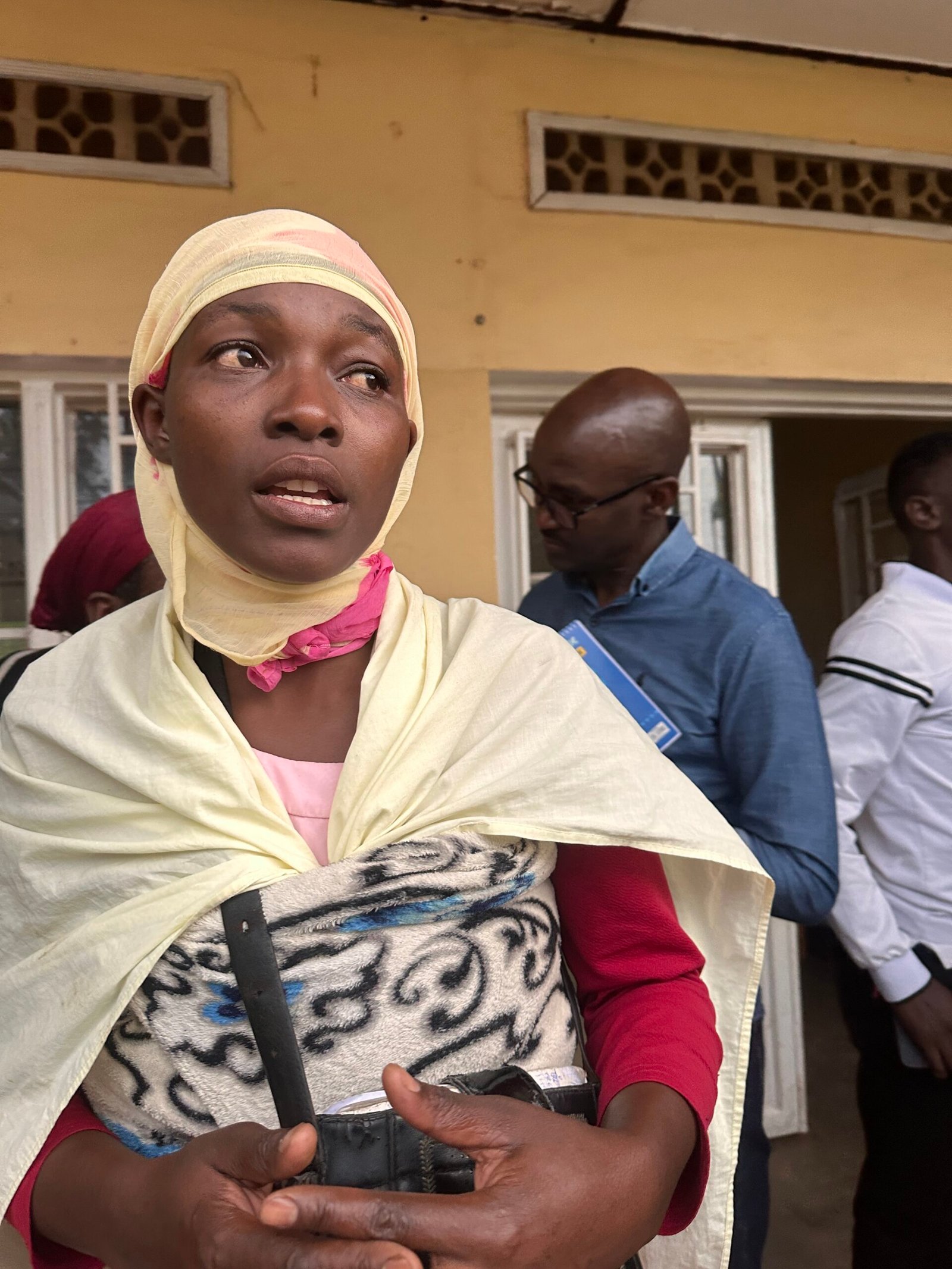
Yvette encourages other parents to take greater responsibility for their children’s nutrition and hygiene.
Her experience illustrates how community based childcare can help address one practical challenge facing working parents; ensuring that young children are cared for and fed while their parents earn a living.
Local authorities promoting nutrition and early childcare
David Mugiraneza, Executive Secretary of Nyabihu District, says community childcare centres and other government programmes are among the measures being implemented to improve children’s wellbeing.
He explains that interventions begin during pregnancy, with pregnant women encouraged to attend antenatal care early, maintain proper nutrition and avoid behaviors that could negatively affect their children’s health.
He says childcare centres established in villages also help parents, particularly women engaged in different economic activities, find a place where their children can be cared for while they work.
“The childcare centres established by the government in villages are important. Each administrative cell has childcare centres that help parents engaged in different activities find a place to leave their children. This allows them to work with confidence, knowing that their children are being cared for and provided with meals,” he says.
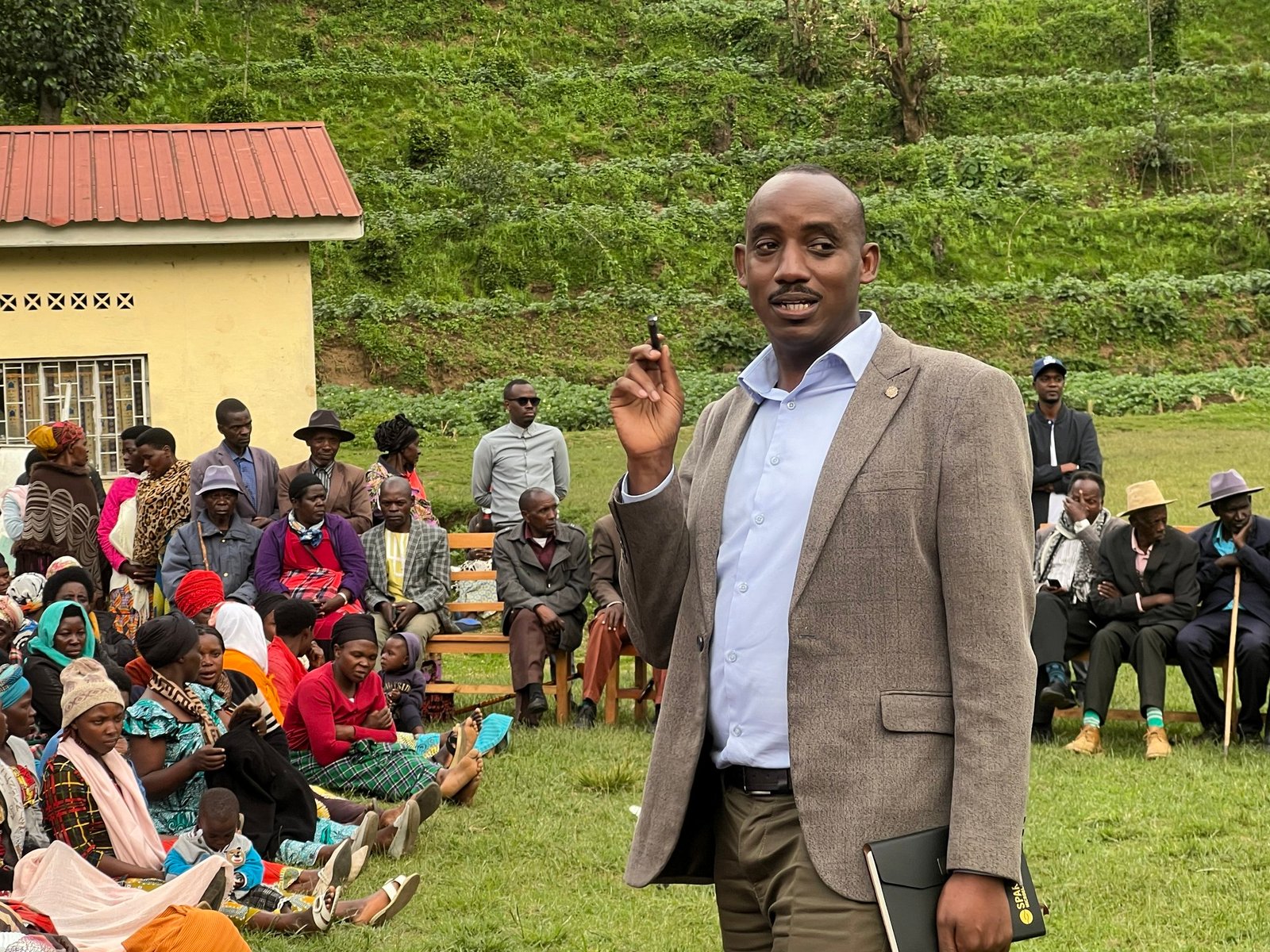
Mugiraneza adds that the district, together with its partners, is continuing to promote balanced diets and proper hygiene when preparing children’s food.
“It is important to encourage parents to care for their children and provide them with balanced diets, but hygiene must not be overlooked. When food is prepared under unhygienic conditions and given to children, it can expose them to illnesses, including intestinal worms, which can interfere with their growth,” he says.
He acknowledges that the reduction in stunting is encouraging but says further efforts are necessary to eliminate the problem.
Changing family practices: fathers also have a role
Beyond public programmes and childcare facilities, the involvement of families is essential in ensuring that children receive adequate nutrition.
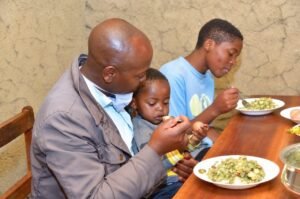
Iradukunda Ernest, a resident of Jenda Sector, says responsibility for children’s nutrition should not be left to women alone. He believes fathers should participate in household decisions about food and childcare.
He says couples should plan their children’s meals together and make the best use of the food available to their households.
“Men should consult with their spouses and jointly plan the meals they give their children. If children eat cereals and starchy foods one day, the following day they should also have vegetables and fruits. This should depend on the family’s financial capacity, but parents should make every effort to provide children with sufficient and nutritious food,” he says.

Iradukunda adds that cooperation between parents is important because family conflicts can affect children’s wellbeing and access to essential needs.
Uwayisaba Diane, from Bukinanyana Cell in Jenda Sector, says some children experience poor nutrition not necessarily because their families lack food, but because some parents do not give sufficient attention to their responsibilities.
“Sometimes a parent goes to a bar to drink alcohol and returns home late without having thought about the children’s meals or hygiene. However, some parents have now started paying more attention to their children’s needs and care,” she says.
Local authorities also identify family conflicts and the consumption of substandard alcoholic beverages as factors that can undermine children’s welfare.
Mugiraneza says money that should support household needs may instead be spent on alcohol, sometimes leading to conflicts that affect children.
He says promoting responsible family relationships and encouraging parents to prioritise children’s needs are important parts of the district’s efforts to tackle stunting.
Progress recorded, but some Districts still face high stunting rates
The 2025 RDHS-7 shows that stunting among children under five nationally declined from 33.1% in 2019/2020 to 26.75% in 2025.
In the Western Province, several districts also recorded reductions. In Ngororero, stunting declined from 50.5% to 35.81%, while Nyabihu recorded a decrease from 46.7% to 32.68%. In Nyamasheke, the rate fell from 37.7% to 29.64%.
However, Karongi District recorded an increase, from 32.4% in 2019/2020 to 33.54% in 2025.
Jean Bosco Ntibitura, Governor of the Western Province, says addressing stunting requires leaders to engage directly with communities, listen to residents and help families understand their role in finding solutions.
He explains that stunting can begin during pregnancy, making it important to monitor the health of expectant mothers and educate families about appropriate nutrition.
The Governor also points out that some households have food and livestock but do not necessarily use these resources to improve children’s diets.
“Sometimes food is available, but parents do not know how to prepare a balanced diet for their children. Families have livestock, but they sell the milk and eggs instead of giving some to their children. It is important to monitor pregnant women and educate parents so that they can change their attitudes. Not all cases of stunting are caused by poverty,” he says.
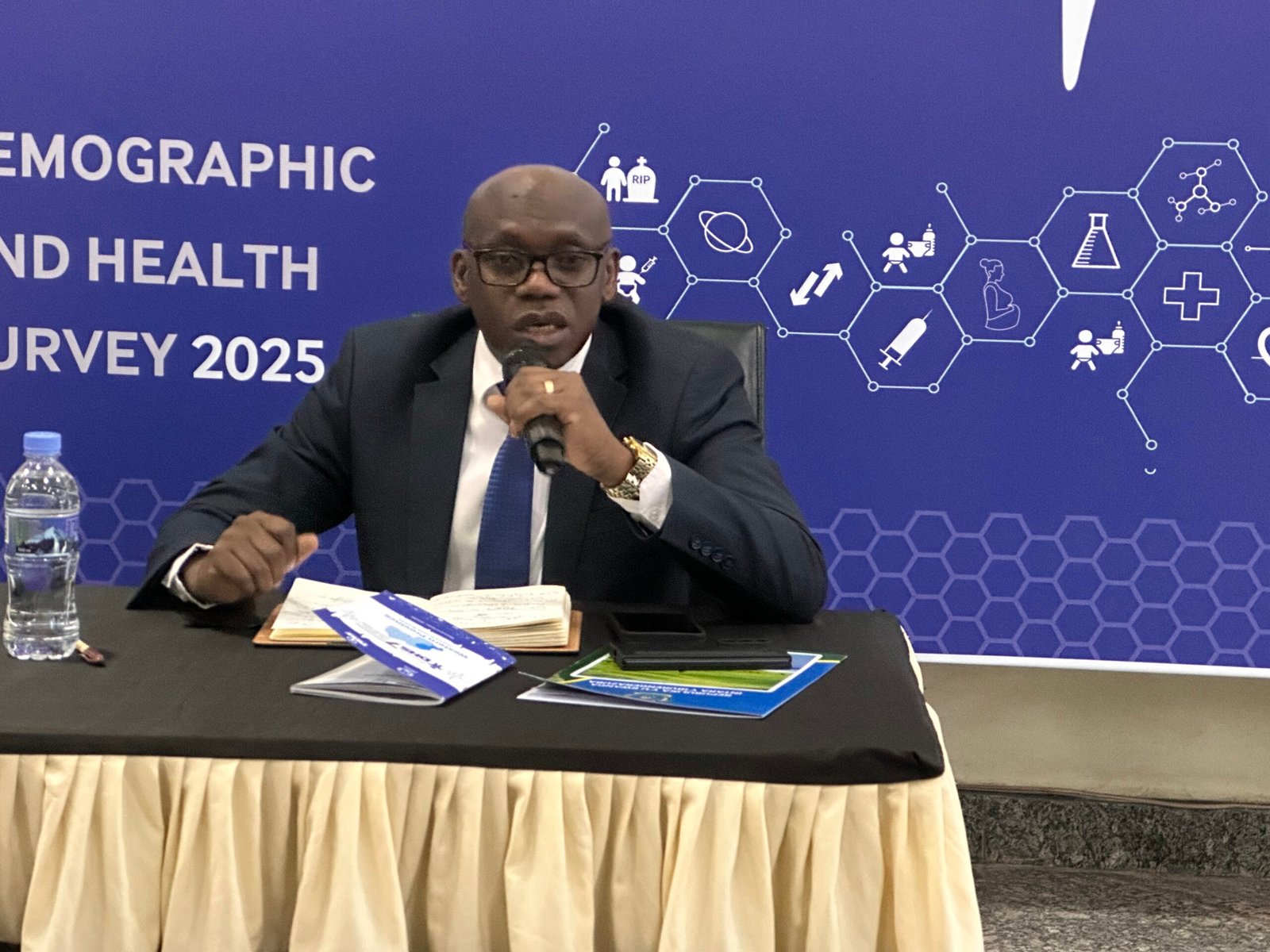
He emphasises that awareness campaigns should help families make better use of the food and resources they already have.
Nutrition programmes supporting mothers and children
At the national level, Rwanda has introduced several interventions aimed at improving maternal and child nutrition.
Machara Faustin, responsible for maternal and child nutrition at the National Child Development Agency (NCDA), says these programmes include community education on nutrition during pregnancy, breastfeeding, complementary feeding, balanced diets, hygiene and child growth monitoring.
The interventions also include nutritional supplements for pregnant women, such as iron and folic acid (IFA) and multiple micronutrient supplements (MMS). Young children receive Vitamin A and micronutrient powder.
Another initiative is the Shisha Kibondo programme, which supports vulnerable pregnant women and children aged between six and 24 months.

Machara says school feeding programmes in pre-primary and primary schools also help children access at least one meal a day, while easing the burden on parents.
He adds that regular growth monitoring helps identify children showing signs of malnutrition or stunting early enough for appropriate support.
Why stunting persists despite existing interventions
Despite the interventions, several challenges continue to affect children’s nutrition.
Machara identifies limited knowledge of balanced diets and hygiene as some of the factors contributing to stunting. Poor hygiene can expose children to illnesses such as diarrhoea, which can interfere with the body’s ability to absorb nutrients.
Unplanned pregnancies, low birthweight, inappropriate complementary feeding and inadequate food preparation practices can also affect children’s growth.
He further notes that poverty and food insecurity prevent some households from accessing sufficient and diverse meals.
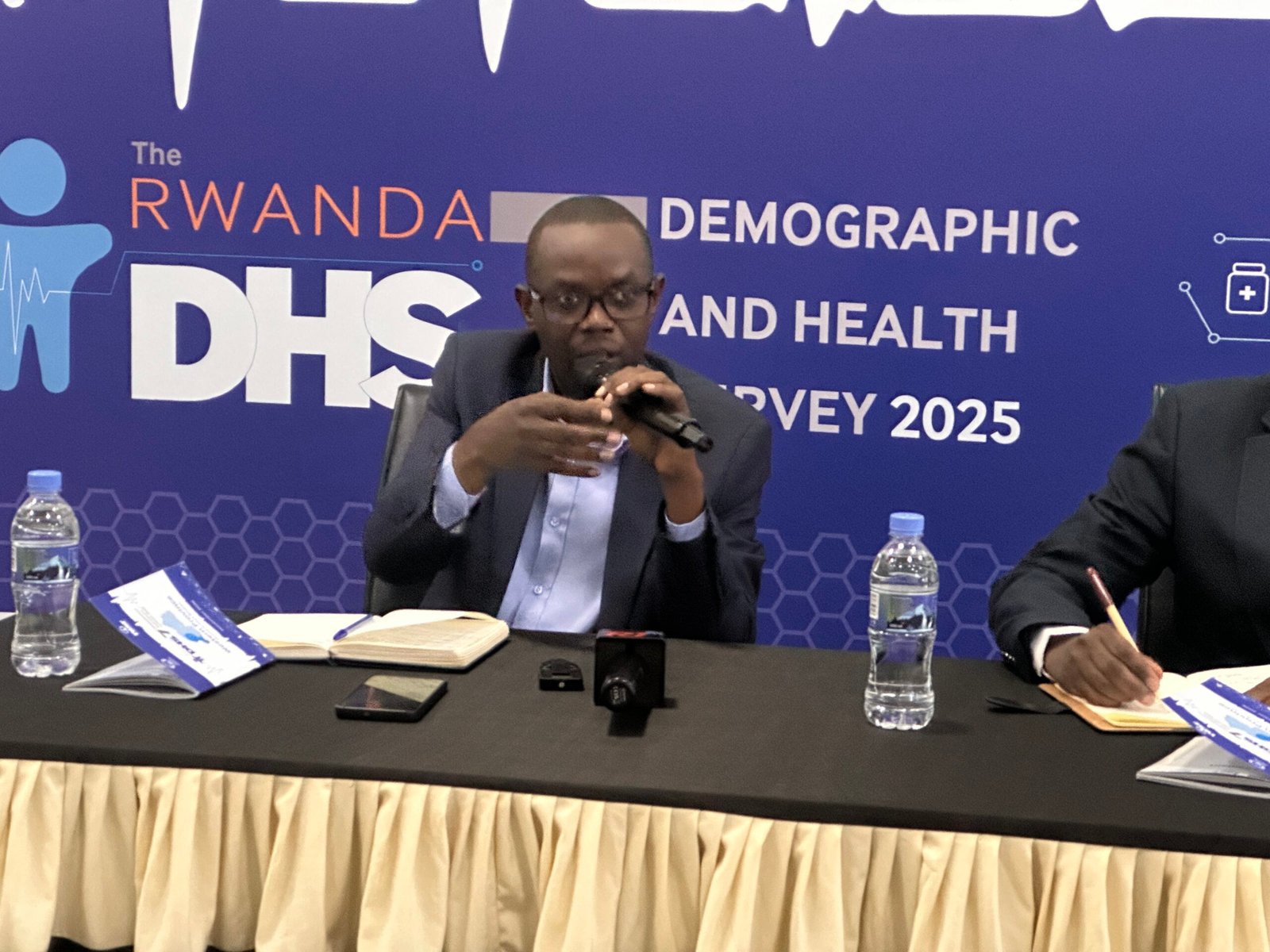
Byiringiro James, a research officer at the National Institute of Statistics of Rwanda (NISR), says that although stunting is declining, the pace of progress remains slow compared with the consequences of the condition and the country’s development targets.
He notes that the National Strategy for Transformation 2 (NST2) includes a target of reducing stunting to 15% by 2029, requiring stronger efforts to accelerate progress.
The Governor’s observations also point to the importance of changing household practices. Having food or livestock does not automatically guarantee that children receive adequate nutrition. Families need information and support to make sure available resources contribute to healthier diets.
The long term cost of child stunting
According to Machara, stunting affects more than a child’s physical growth. It can also interfere with brain development, learning and memory.
Children affected by stunting may experience difficulties with learning, remembering and analytical thinking, potentially limiting their educational and future opportunities.
Poor nutrition can also weaken children’s immune systems, making them more vulnerable to illnesses.
At the national level, he says, stunting can undermine economic productivity because children affected by poor development may face difficulties reaching their full potential as future members of the workforce.
Early identification and appropriate support matter
Machara says positive changes in a child’s growth may be possible when stunting or nutritional problems are identified early and the child receives appropriate support.
He highlights the importance of providing children with diverse and balanced diets containing essential nutrients. Foods such as milk, eggs, meat and fish can contribute important nutrients to children’s development.

Maintaining proper hygiene, preventing illnesses such as diarrhoea, seeking medical care when children become ill and monitoring their growth are also essential.
He emphasizes that parents should follow healthcare professionals’ advice to ensure that children receive appropriate care.
Strengthening existing solutions to reduce stunting further
Machara says sustained efforts are needed to strengthen existing interventions, particularly community education on nutrition, breastfeeding, balanced diets and hygiene.
He also highlights the role of agriculture and livestock programmes in helping vulnerable households’ access foods that improve children’s nutrition.
Supporting families to keep livestock such as chickens, goats and cows can improve access to animal source foods, including eggs and milk.
Access to clean water, improved sanitation and proper household latrines are also important in preventing illnesses that can contribute to poor child growth.
Nyabihu’s reduction in stunting demonstrates progress, while the experiences of parents and local authorities highlight practical approaches being used to address the problem. However, with nearly one in three children under five still affected, the next challenge is to strengthen these interventions, assess their impact and ensure that more families can benefit from them.
About Author