

Urban Forestry at the Heart of Rwanda’s Climate Resilience
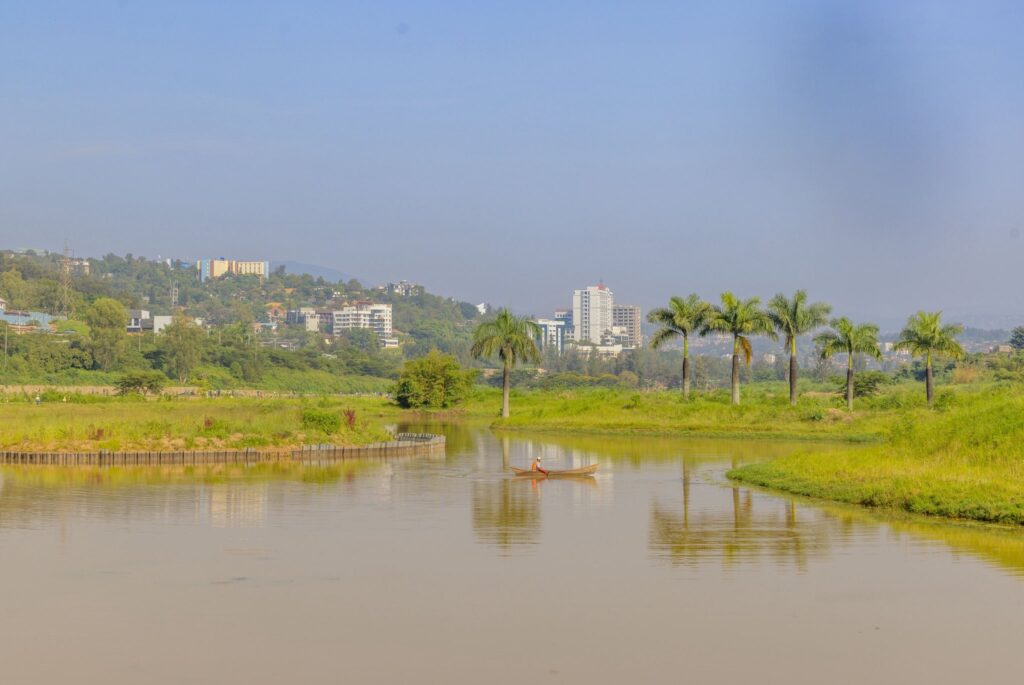
As of February 2026, Rwanda’s forest cover stands at 724,695 hectares, representing 30.4 percent of the country’s total land area, according to the Rwanda Forestry Authority (RFA).
The figures, provided by the authority in a written response dated 18 February 2026, confirm that Rwanda has achieved its long-term national target for forest restoration, marking a significant recovery after decades of environmental degradation.
While this national progress reflects sustained investment in reforestation and conservation, data on forest cover in urban areas remain unavailable.
“The government is preparing to collect data to assess the total loss of forest areas, including urban forests,” the RFA stated.
Seven years ago, the 2019 Rwanda Forest Cover Mapping Report highlighted that Kigali City continues to struggle to protect its remaining forests amid rapid urban growth, with forest cover representing just 17 percent of its total area, or approximately 12,641 hectares. This explains why tree‑planting initiatives remain necessary.
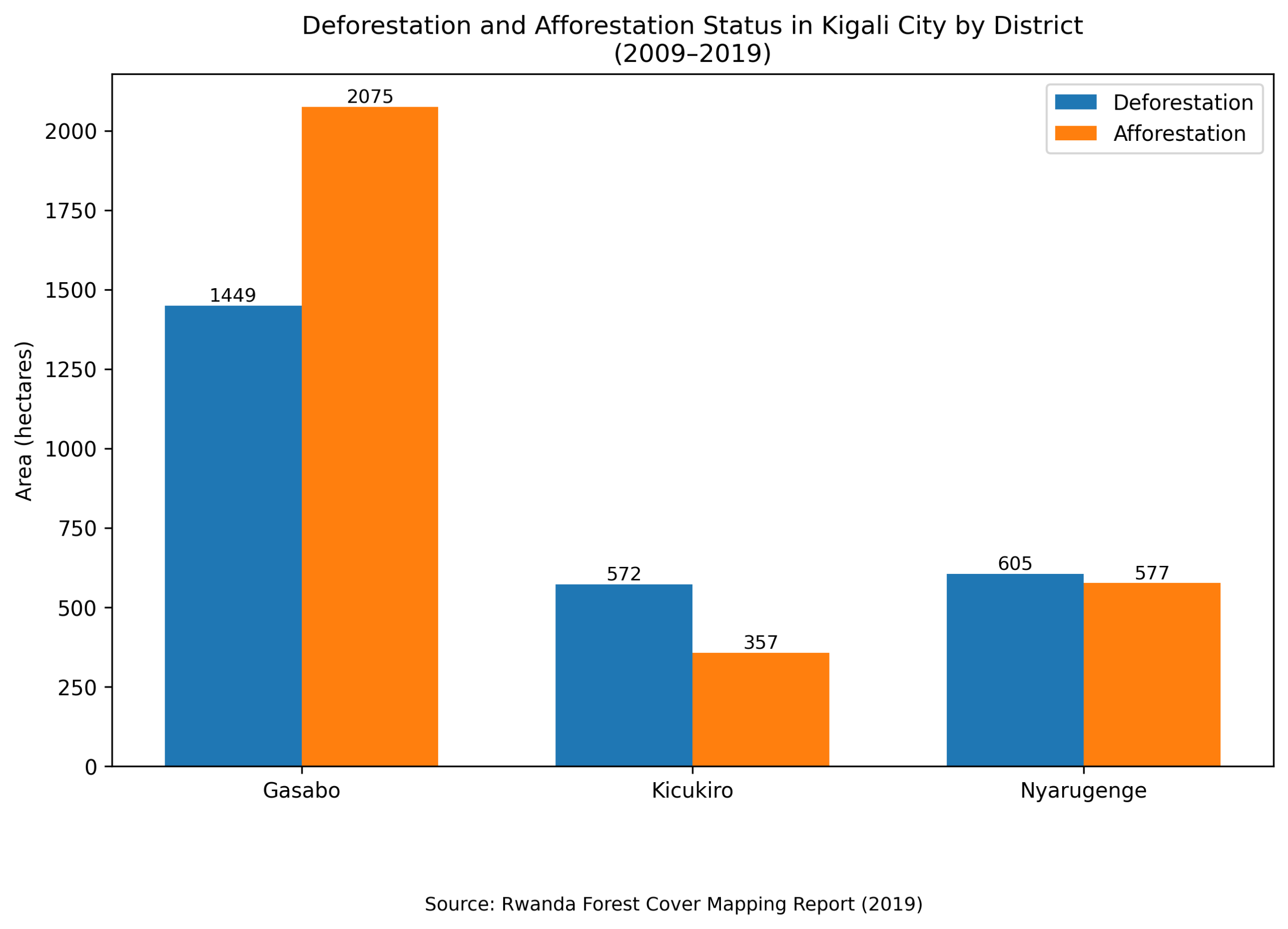
Changes in forest cover since 2009 reveal both deforestation and reforestation trends. Over a ten‑year period, reforestation reached 26.4 percent, while deforestation stood at 23 percent, resulting in a marginal net annual increase of just 0.3 percent in Kigali’s forest cover.
Although the City of Kigali has not responded to requests for information on the main causes of deforestation, the Rwanda Forestry Authority attributes part of the decline in forest areas to urban development programs, including the construction of houses, roads, and other infrastructure.
According to the authority, changes in land‑use planning between 2020 and 2050 have also contributed to the reduction of forest land in Kigali.
“Some areas previously covered by forests have been allocated for residential development, while other zones have been redesigned for forestry use. In addition, the use of wood for construction and cooking (firewood and charcoal), as well as the conversion of forests into farmland by residents, continues to reduce forest cover”, the RFA confirms
What Used to Be Forest Is Now Concrete
Butangisake Pierre, 60, a long‑time resident of Kimironko Sector in Gasabo District, has lived in the area for more than four decades. He recalls a time when much of today’s urban landscape was covered by dense vegetation.
“There were trees known locally as iminyonza, imisebeya, imimunu, imigunga, imigenge, ruganambuga and umunyinya,” he said. “Most of them were cut down for construction, burned to produce charcoal, or used as timber.”
According to the National Institute of Statistics of Rwanda (NISR), urbanisation is accelerating rapidly, with 66.5 percent of the population expected to live in cities by 2050. This growth is increasing pressure on land and forest resources, making sustainable urban planning increasingly urgent.
Environmental and Economic Consequences
Environmental expert Jean Claude Hafashimana warns that forest loss has far‑reaching consequences.
“Deforestation leads to biodiversity loss, soil degradation, damage to forest infrastructure such as roads, reduced agricultural productivity, climate change and soil erosion,” he explained.
He added that sand and mineral extraction can also contribute to deforestation, particularly when quarries are abandoned without proper environmental restoration, despite existing legal requirements.
Hafashimana further noted that forest loss can deepen poverty, particularly in rural areas where forests play an important economic role.
“Forests are a key pillar of household income. People plant trees and harvest them after several years to support their livelihoods. When forests decline, poverty increases directly,” he said. “Climate change linked to deforestation also disrupts farming seasons and reduces crop yields.”
Climate Change and Human Impact
In Musanze District, Devota Niyonsenga, 28, a resident of Nyange Sector, says climate change has already affected her life. In 2023, heavy rainfall destroyed her home and farmland, forcing her family to relocate.
“We experienced severe floods. Heavy rain and erosion damaged our house, water entered through the roof, and many belongings were washed away,” she said.
Niyonsenga added that after losing their property, her family moved from the disaster‑affected area and rented accommodation elsewhere. Four months later, a non‑governmental organisation provided them with food and shelter.
“My family lost crops worth more than 86,000 Rwandan francs, including potatoes and maize. Even when we replanted, the soil had already been damaged,” she said.
She called on the government to intensify tree‑planting efforts, especially on fragile land, to prevent erosion and protect communities.
Strengthening Urban Forestry
Hafashimana echoed the call, urging the government to prioritise urban forestry and adopt clear forest management strategies based on whether forests are designated for protection or production.
“Production forests should be harvested according to their cycle — around 40 years — while indigenous forests should only be harvested after about 70 years,” he said. “Protective forests, especially along roads, should not be cut, and any removed trees must be replaced.”
He emphasised that roadsides, wetlands, lakeshores and riverbanks still offer opportunities for tree planting in urban areas. He also proposed requiring households with plots measuring at least 20 by 30 metres to plant a minimum of two trees to improve urban air quality.
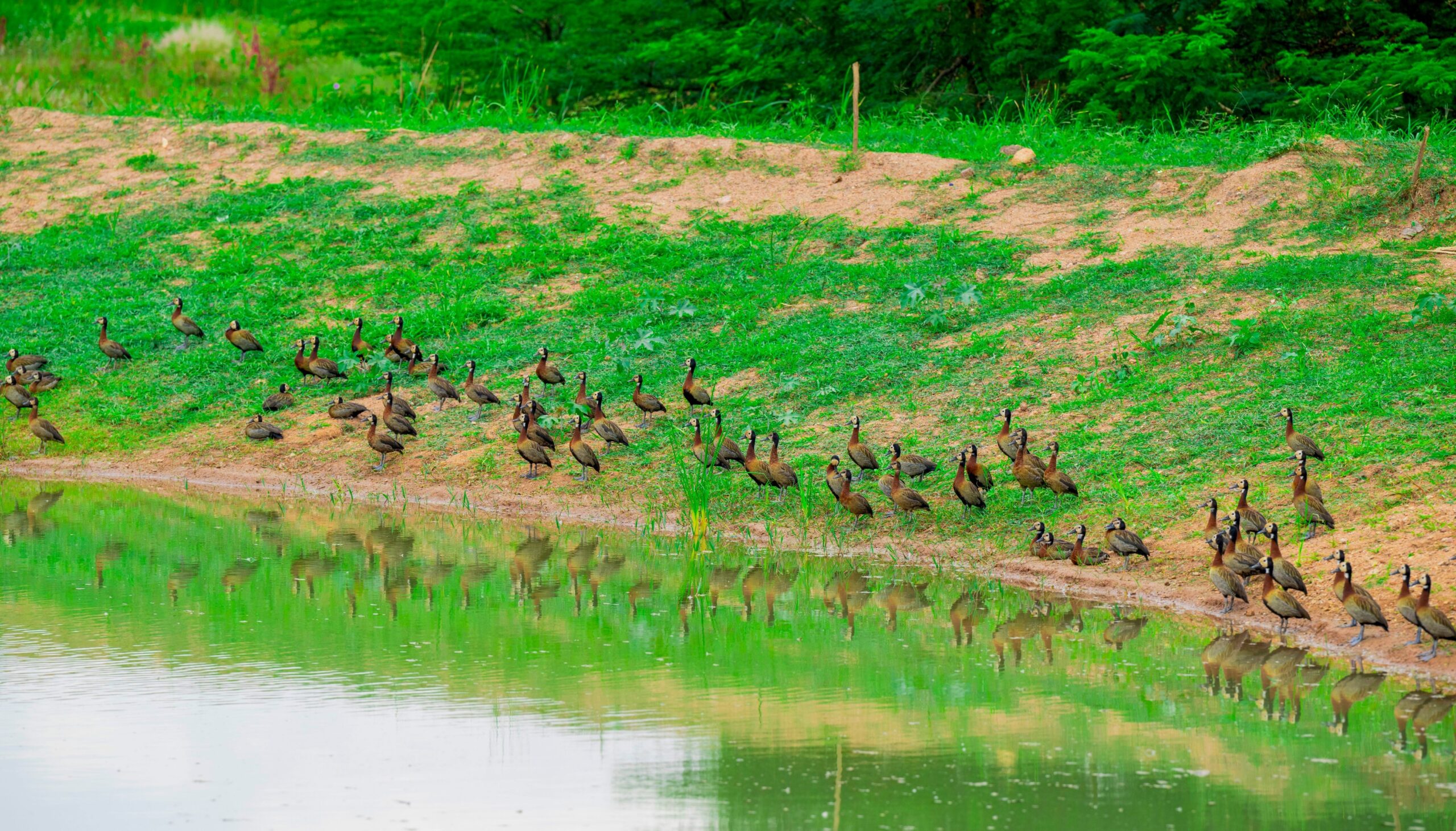
In Kigali, the ongoing restoration of wetlands is also contributing to environmental recovery. Even in areas where trees are not directly planted, these restoration efforts allow natural vegetation, including indigenous trees and herbs, to gradually regenerate. One example is the former Gikondo Industrial Park area, where wetland rehabilitation is already showing promising ecological recovery.
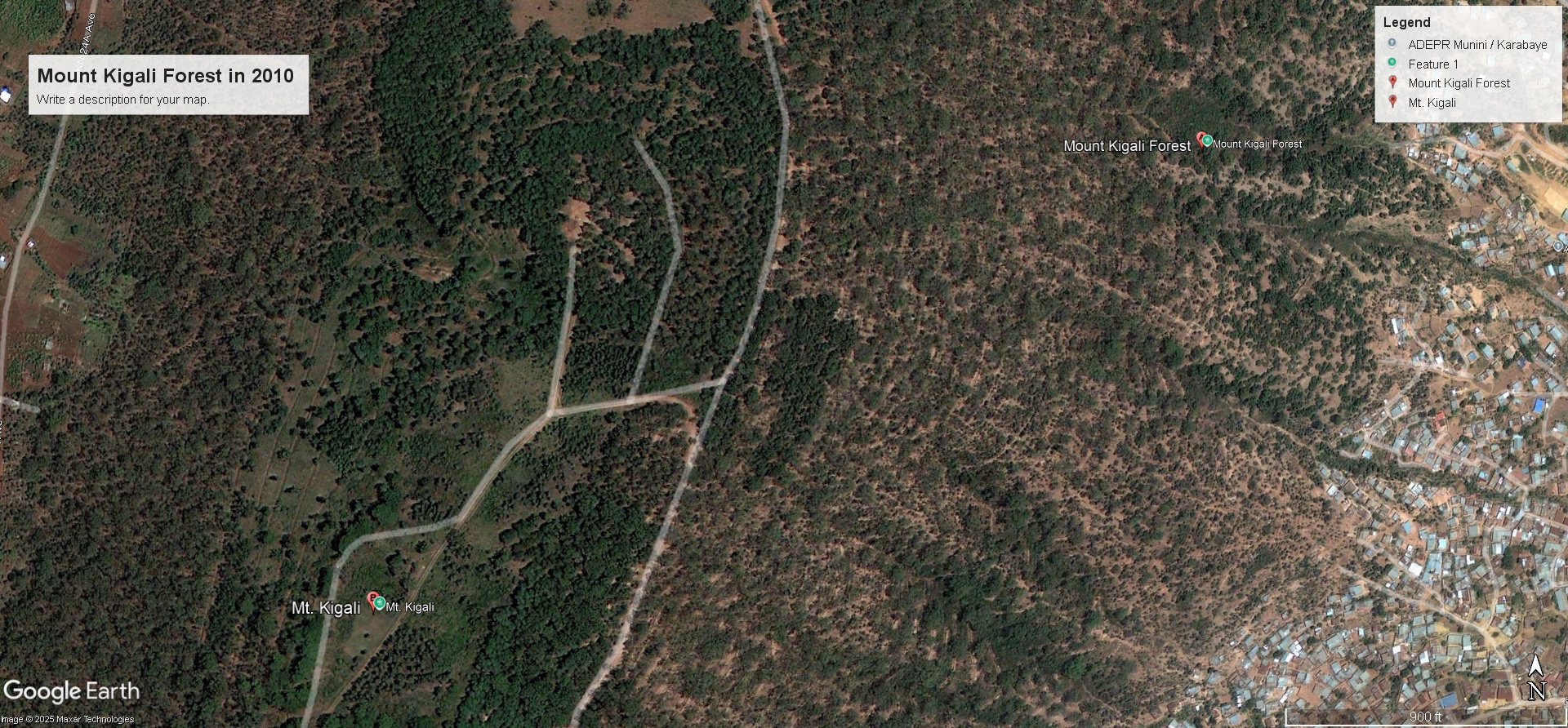
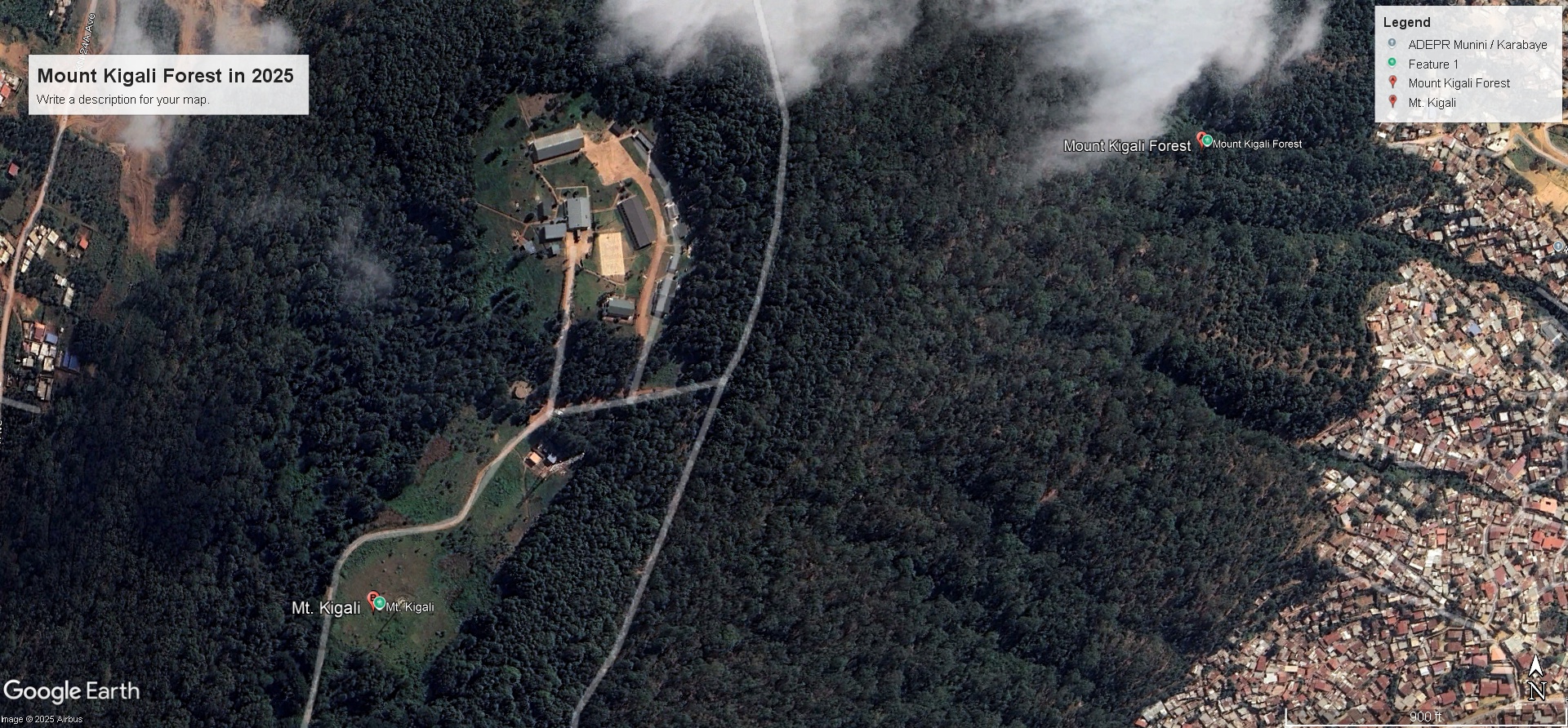
Mount Kigali remains one of the city’s natural “lungs”, playing a crucial role in maintaining green space and ecological balance. However, emerging environmental pressures are becoming visible, particularly in Rebero, where areas once known for their natural landscape are increasingly being converted into construction sites.
Some neighbourhoods in Kigali also offer positive examples of urban tree planting. Kiyovu, for instance, stands out as an area where trees are relatively abundant, creating a greener and more breathable environment.
This contrasts with other parts of Kigali, such as Nyamirambo, Gitega, Gikondo and Kacyiru, where trees are far less common due to dense housing and limited open space. These differences illustrate how urban planning and settlement patterns influence the distribution of green spaces across the city.
Government Efforts and Policy Measures
The Rwanda Forestry Authority confirms that measures are underway to expand forest cover in urban areas.
“Since 2012, cities have promoted indigenous tree species with broad leaves to replace those with smaller canopies,” said Concorde Nsengumuremyi, Director General of RFA. “As a result, urban temperatures have decreased, and rainfall patterns have improved in planted areas.”
The government has also introduced national guidelines on urban tree planting and forest conservation, specifying suitable tree species and planting methods for roadsides, residential areas, parks, wetlands, protected zones, rivers and open public spaces.
Three‑Million‑Tree Planting Campaign
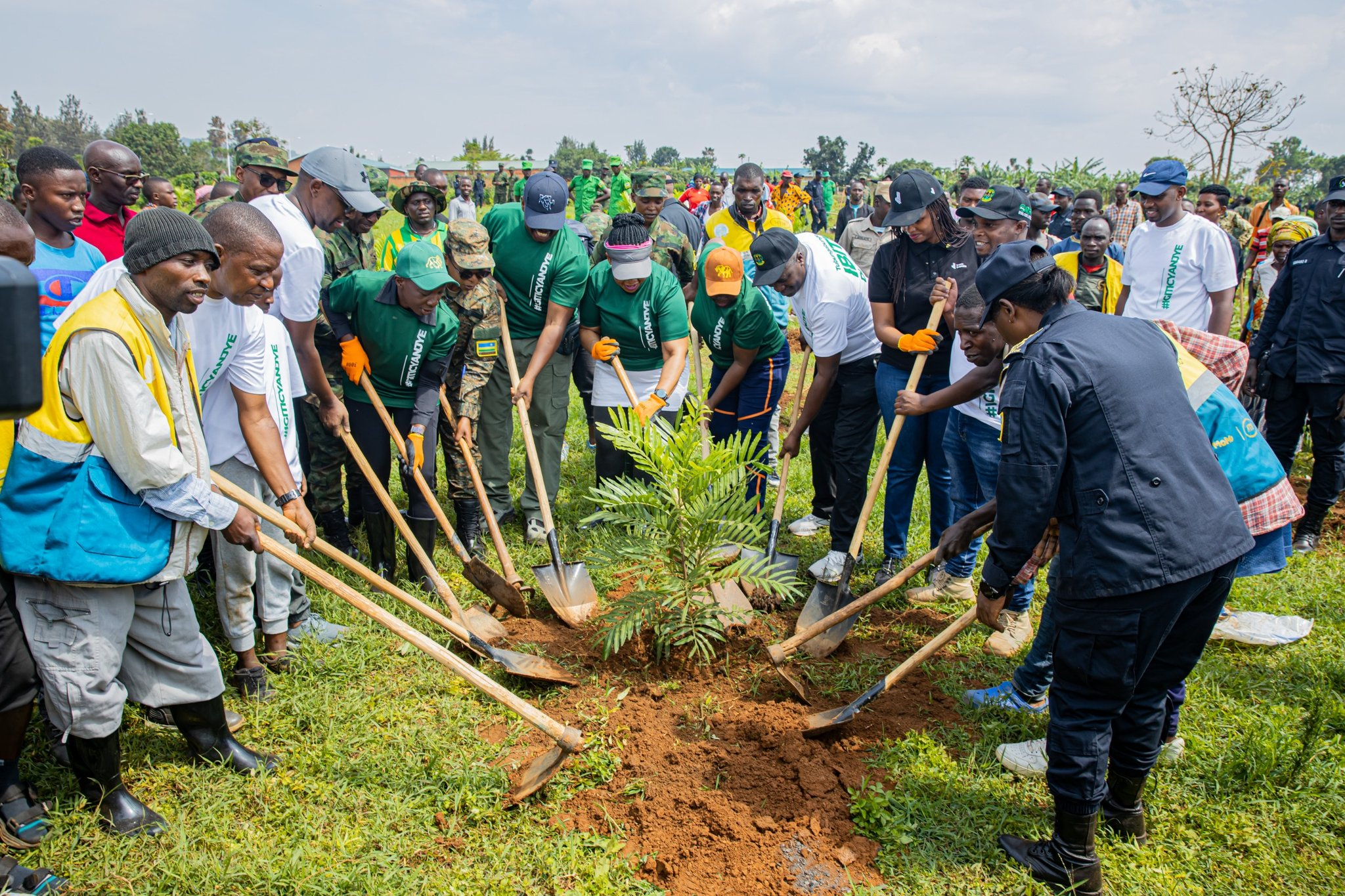
According to the Kigali City Annual Report 2024–2025, the city launched the “Igiti Cyanjye” (My Tree) campaign, which aims to plant three million trees and shrubs by 2029.
During community work, Umuganda, on 26 October 2024, Kigali City Mayor Samuel Dusengiyumva reaffirmed the city’s commitment to the initiative.
“This campaign encourages all Kigalians and our guests to participate not only in planting trees, but also in caring for them so they grow,” he said.
The mayor noted that many previously planted trees failed due to neglect or damage.
“We want residents to take ownership. Anyone who plants a tree should water it, fertilise it and monitor its growth. Every household should have at least three trees during this planting season,” he said.
Residents were encouraged to plant fruit trees for their nutritional benefits, while local leaders were urged to plant trees along both paved and unpaved roads to reduce heat, provide shade and improve air quality.
“Igiti cyanjye means I know the tree I planted, I care for it, and if it dies, I replace it,” the mayor said.
The campaign aims to plant more than three million trees along roads, in designated forest areas and in home gardens across Kigali over the next five years.
As of 2025, a total of 1,060,642 trees have been planted under the campaign, contributing to Kigali’s greening efforts and long‑term environmental sustainability.