
Early Childhood development centres offer hope in Nyabihu’s fight against child stunting
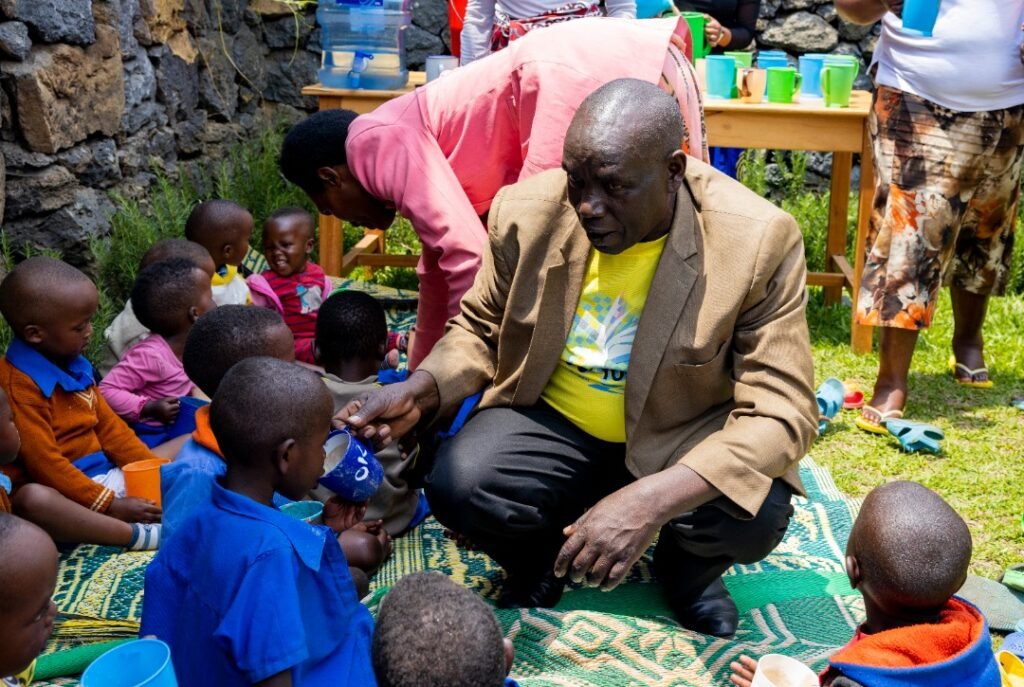
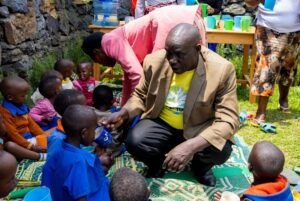
One of the childcare centres in Nyabihu District. Photo: UNICEF Rwanda.
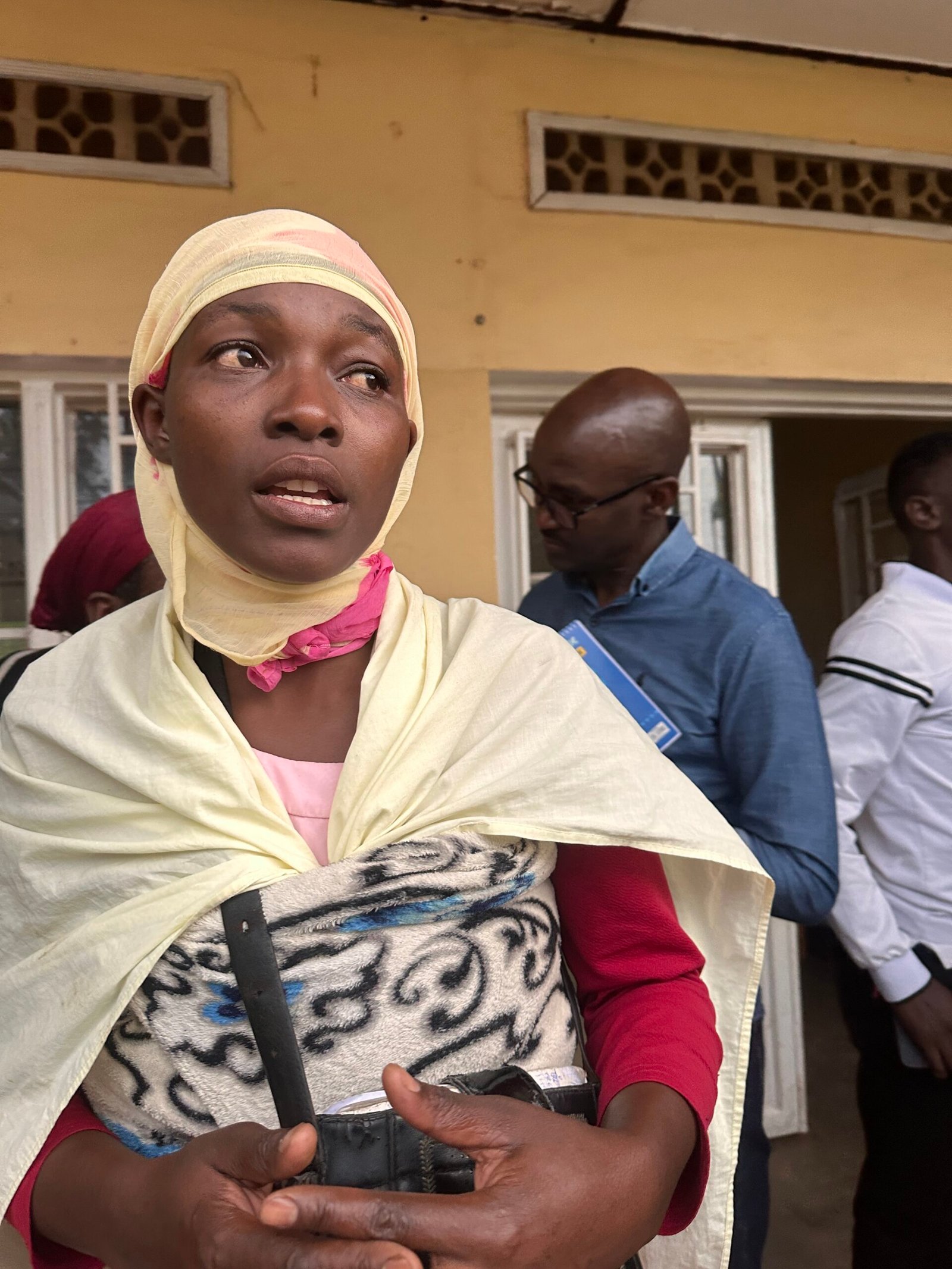
The morning is sunny in Nyabihu District as Umubyeyi Yvette, gets ready her four-year-old boy to go to a nearby Early Childhood development centre in Jenda Sector.
“I can’t let my boy skip even a single day because I know how important the Early Childhood Development Centre has been in helping my child get out of stunting” recalls the 35-year-old mother who runs a cross-border business between Rwanda and DRC.
“This ECD model is the most successful in combating stunting, I wish it reaches every corner of the country” adds Umubyeyi looking at her smiling child who two years back.
The message by Umubyeyi Yvette is a reminder that though significant achievements were registered in reducing stunting, there is still a long way to go to attain Rwanda’s goals in this area.
According to the 2025 Rwanda Demographic and Health Survey (RDHS-7), the prevalence of stunting among children under five in Nyabihu declined from 46.7% in 2019/2020 to 32.68% in 2025, a reduction of 14.02 percentage points over five years.
While the district has recorded a decline in stunting rates, nearly one in three children under five remains affected, highlighting the need to strengthen existing interventions.
The stunting rate in Nyabihu is higher than the national average standing at 26.75% which despite having decreased from 33.1% in 2019/2020 remains high given the national target.
Umubyeyi Yvette believes that given the conditions that her child was able to surmount thanks to ECD services, there is hope that the country can attain its targets in fighting stunting.
“I remember like it happened yesterday. I would take goods across the border and leave the child crying and came back still to see it crying. I attributed the problems to witchcraft. Later on, community health workers identified my child among those with stunting. They took to the ECD. My child’s living conditions improved. He is fine now. I am sure the ways that were used can lift more from stunting”
Community childcare centres, nutrition education and greater involvement of parents in childcare are among the approaches being used in Nyabihu District to tackle child stunting.
Community childcare centres helping parents care for children
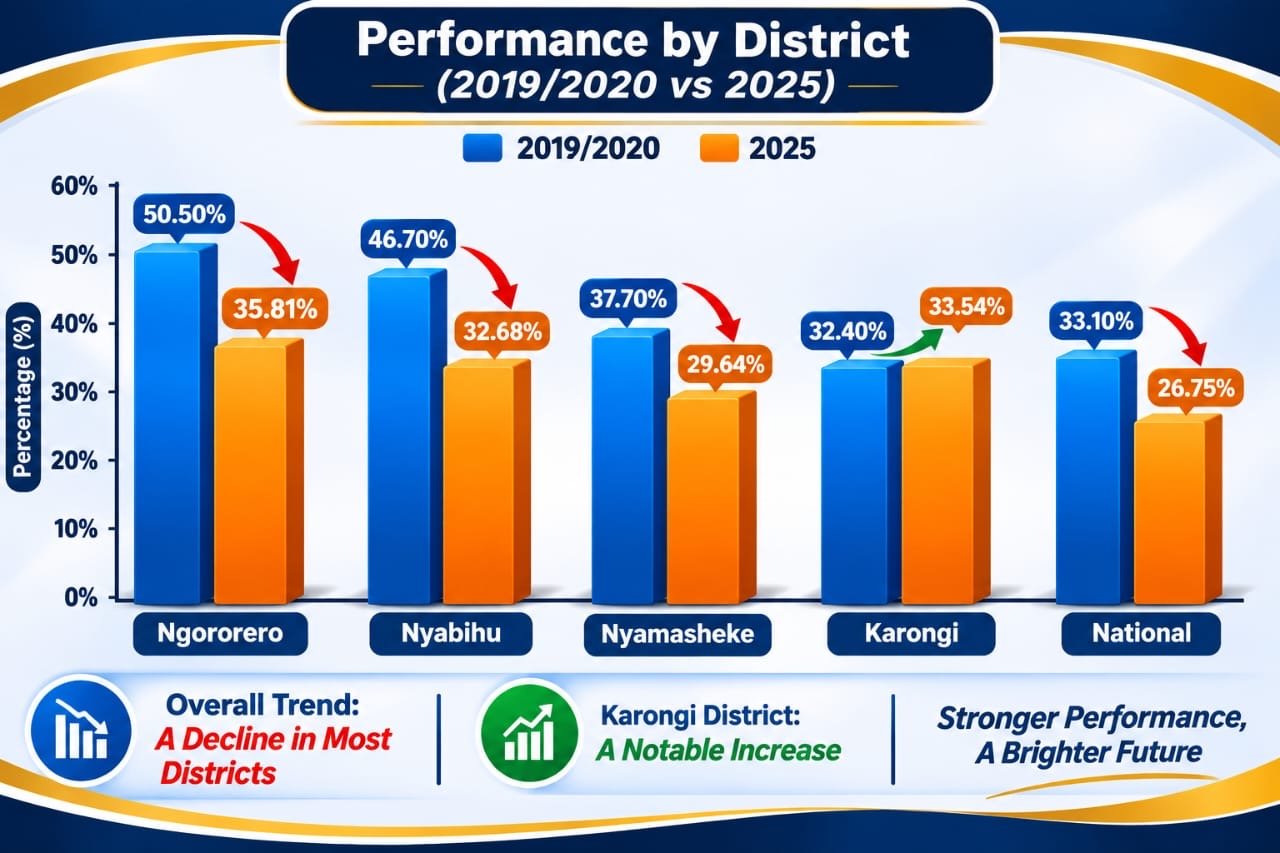
In the Western Province, several districts also recorded reductions in cases of stunting. In Ngororero, stunting declined from 50.5% to 35.81%, while Nyabihu recorded a decrease from 46.7% to 32.68%. In Nyamasheke, the rate fell from 37.7% to 29.64%.
However, Karongi District recorded an increase, from 32.4% in 2019/2020 to 33.54% in 2025.
For parents who spend much of their day working to support their families, finding someone to care for their children can be difficult. In Jenda Sector, community childcare centres are providing an option that allows parents to pursue their livelihoods while their children receive care and meals.
Umubyeyi Yvette, 35 ans, a mother of six, says the childcare centre near her home has made a difference, particularly for parents who previously travelled to the Democratic Republic of Congo (DRC) in search of work.
She explains that some children were left without adequate care when their parents crossed the border to work. The establishment of childcare centres has helped address some of these difficulties.
“Previously, children sometimes suffered from poor nutrition because we were unable to care for them properly while we went to work in Congo. The childcare centre has helped us because children now receive meals. I also take my child there, which allows me to go to work with peace of mind, knowing that my child will receive a nutritious meal,” she says.
The improvement represents progress, but the figures also show that the challenge remains significant. The experience of families and local authorities’ points to the importance of ensuring that children receive adequate nutrition and care, while addressing the social and household factors that contribute to stunting.
Yvette encourages other parents to take greater responsibility for their children’s nutrition and hygiene.
Her experience illustrates how community based childcare can help address one practical challenge facing working parents; ensuring that young children are cared for and fed while their parents earn a living.
District stunting rates (DHS 2019/20 Vs 2025)
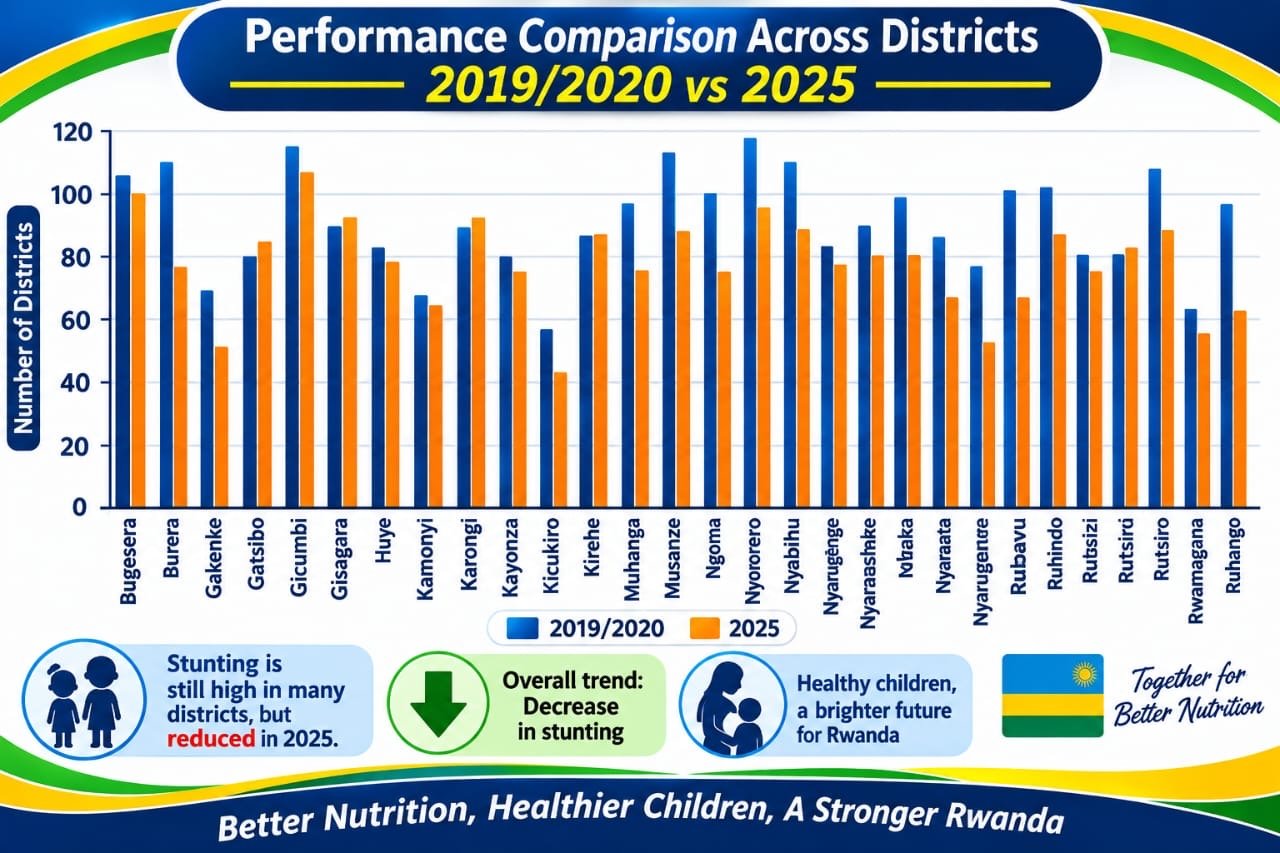
The fight against stunting is among national priorities of Rwanda and the country invest resources in data and research to inform interventions of government institutions and partners. The most important report used to monitor stunting is the Demographic Health Survey (DHS) published every five years.
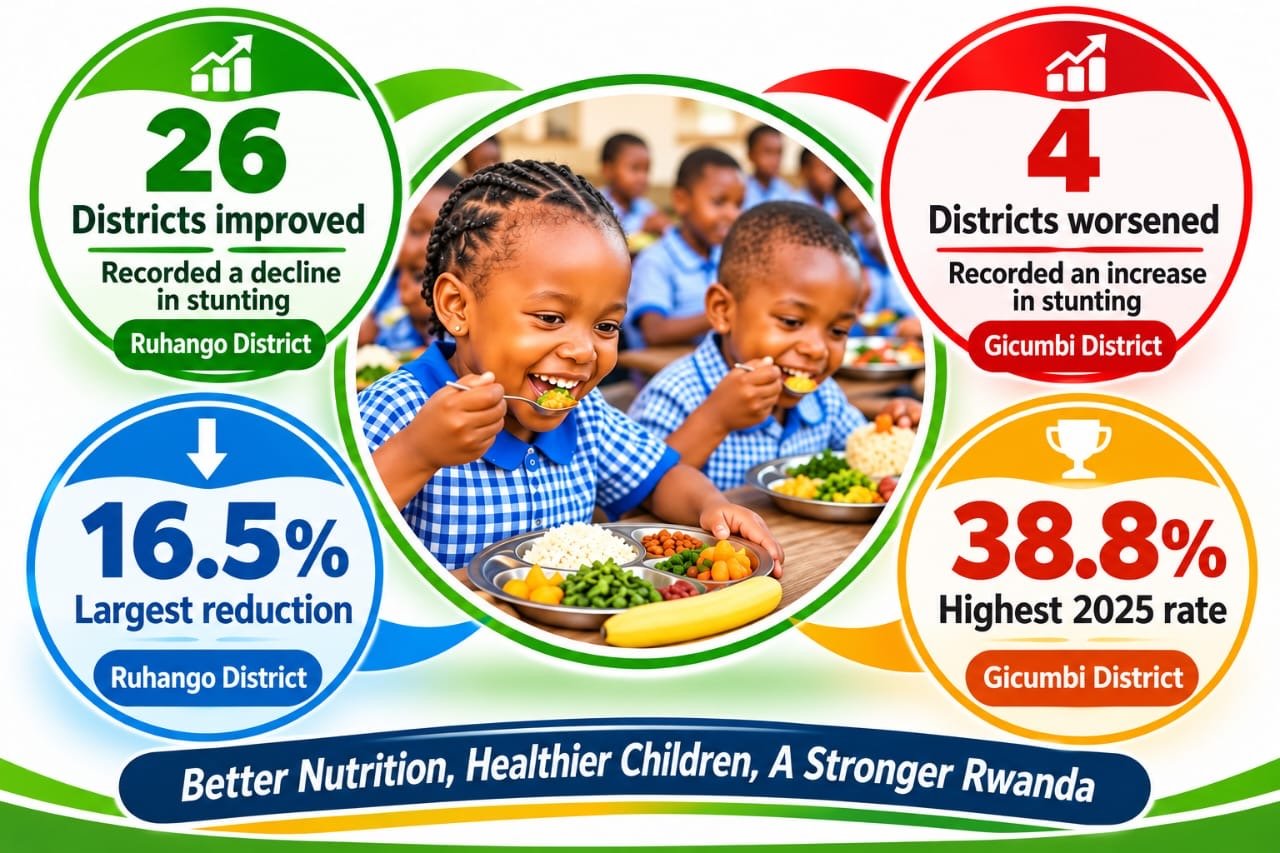 This is an AI-generated image.
The DHS 2025 indicated that significant progress is being made in Rwanda’s journey to eradicate stunting, but there is still a long way to go and it has been also highly noted that beyond food production there is a need for increased education on preparation of nutritious meals.
About Author